Glogster or prezi
Thursday, July 23, 2015

Tuesday, July 21, 2015
Media & Technology (debate)
Media technology is often seen as the "wave of the future". The message is clear: if you don't want to be left behind in the last century, you've got to join the system. Here's an example:
What Most Schools Don't Teach
Media technology includes desktop publishing, print-on-demand, the internet, video-games, cable, satellite, and global television, digital and interactive television, CD's, DVD's, Blue Ray, etc. Every year new products appear on the technological horizon--each one promises to be better than the last. But who remembers the 8-track, or the laser disc, or the Atari 2600? The central question might be: do we need all this stuff? The media's answer: yes.
The Story of Stuff (2007) video documentary
Technological Determinism: The assumption that technological progress is inevitable and that it is necessary for social change.
Okay, technology and computer programming seems like it's here to stay for a while. It definitely can make our lives easier (or more complicated). Let's set up a little debate. Where do you stand on the issue?
Volunteers (teams of 4) will choose either to be PRO technology, or ANTI technology. These two groups will be asked to discuss the topic while the rest of us view the debate in a classroom fishbowl.
But first, let's go do some research.
What Most Schools Don't Teach
Media technology includes desktop publishing, print-on-demand, the internet, video-games, cable, satellite, and global television, digital and interactive television, CD's, DVD's, Blue Ray, etc. Every year new products appear on the technological horizon--each one promises to be better than the last. But who remembers the 8-track, or the laser disc, or the Atari 2600? The central question might be: do we need all this stuff? The media's answer: yes.
The Story of Stuff (2007) video documentary
Technological Determinism: The assumption that technological progress is inevitable and that it is necessary for social change.
Okay, technology and computer programming seems like it's here to stay for a while. It definitely can make our lives easier (or more complicated). Let's set up a little debate. Where do you stand on the issue?
Volunteers (teams of 4) will choose either to be PRO technology, or ANTI technology. These two groups will be asked to discuss the topic while the rest of us view the debate in a classroom fishbowl.
But first, let's go do some research.
Anti Technology: build a case against rampant consumption of technology--is all technology necessary? What are the negative effects of some technology? Look this up and be prepared to declare: why can't we live a simple life in our cabin in the woods like Thoreau.
Pro Technology: build a case for the consumption of technology--how does technology help us improve our lives? Look this up and be prepared to declare: we can't live without technology!
Others: (choose 1 item from this list and research. Each of you will present a quick 1-2 minute presentation on the item and ultimately decide if the innovation/invention was good or bad for humanity)
- The Wheel
- The Printing Press
- The Internet
- Semiconductor electronics
- The Atom Bomb (Nuclear Fission)
- Cement
- Air conditioning
- Fracking
- Dynamite
- The Steam Engine
- Refrigeration
- Optical lenses
- The Telegraph
- The Radio
- The Microwave
- The Telephone
- The Television
- The gun
- The Airplane
- The mechanized clock
- Paper money
- The assembly line
- Cigarettes
- Styrofoam
- Alcohol
- The Cotton Gin
Representation in the Media
The term verisimilitude is the appearance of being real or truthful. Since concepts like "truth" and "reality" are largely subjective, the narratives, images, and stories we tell can either support the status quo (maintaining power structures). [by the way, verisimilitude is created in our writing by copious (lots) of detail and description.]
How we depict or represent characters in novels, television programs, comics, and films, for instance, or how images are used by the media to sell products or persuade us can marginalize or reinforce stereotypes of certain hegemonic groups. This all gets tricky because representation is a political act as much as it is an attempt to create meaning. For the masses, that often means shoveling a perspective in front of you (the audience) and showing you a simplified concept.
Writers often do not mean to be cruel or ignorant, but want to get across their point as easily as possible. Busy writers tend to cut corners by relying too much on archetype, templates, stereotypes, cliche, or simplistic representation (particularly with minor characters). It's easier to depict your antagonists as a commonly hated group that is easily recognizable than it is representing the truth. A man in a black hat represents a bad man in Westerns; a Nazi represents evil in war films, etc.
Why is this important? By showing a representation of reality, the media creates meaning for us. We are basically told what to think, based on what the media (or particularly a small group of elite corporate executives) wants us to think.
1. Miss Representation (documentary)
2. The Mask You Live In (documentary)
3. Middle Eastern & Muslim Stereotypes: Eefa Shehzad (TED talk/speech)
4. Black men in America (clip)
4. The Celluloid Closet (documentary)
How we depict or represent characters in novels, television programs, comics, and films, for instance, or how images are used by the media to sell products or persuade us can marginalize or reinforce stereotypes of certain hegemonic groups. This all gets tricky because representation is a political act as much as it is an attempt to create meaning. For the masses, that often means shoveling a perspective in front of you (the audience) and showing you a simplified concept.
Writers often do not mean to be cruel or ignorant, but want to get across their point as easily as possible. Busy writers tend to cut corners by relying too much on archetype, templates, stereotypes, cliche, or simplistic representation (particularly with minor characters). It's easier to depict your antagonists as a commonly hated group that is easily recognizable than it is representing the truth. A man in a black hat represents a bad man in Westerns; a Nazi represents evil in war films, etc.
Why is this important? By showing a representation of reality, the media creates meaning for us. We are basically told what to think, based on what the media (or particularly a small group of elite corporate executives) wants us to think.
The Hegemonic Model: the ruling classes rule us through influence and persuasion rather than force. This is done by creating a consensus about an idea, social group/event, or product. This is a Marxist theory. The media makes things they want to "sell us" seem "natural"--which supports the status quo and the current structures of power. Essentially, we are in consensus about who is to rule or lead, and who is to follow.
The Pluralistic Model: Consensus is created from the views and values of the masses, which allows the media to cater to or "sell" diverse viewpoints or products to the masses through consumer "choice". In this model, the media's job is to please, entertain, or satisfy the presumed needs of the masses. It is the masses job to select media that supports or addresses their need or desire.Let's examine representation in the media. There are 4 documentaries/speeches that we are going to examine. For each one in the coming classes, we will view, discuss, and write about our findings. Before we do that, however, a little academic vocab.
- Marginalization: the process of treating a person, idea, product, or concept as inferior, insignificant, or peripheral (out of direct sight).
- Hegemony: an identifiable or dominant social/cultural group.
- Stereotyping: representation used to categorize a group of people (usually in a negative light).
- Stereotype: an easily recognizable "character" who is seen not as an individual, but symbolizing a group or type.
- Verisimilitude: Semblance or appearance of truth or reality, usually as details or description in a text.
- Representation: how a text produces verisimilitude or "truth" of reality.
- Audience: the targeted group of a text.
- Consensus: agreement about a concept/idea or way of doing something.
- Status Quo: the existing state of affairs; the current situation.
- How does the Media represent these groups to its audience?
- What is the cost or effect to these groups by the Media's use of marginalizing and stereotyping? (What's at stake?)
- How do these arguments support or challenge the status quo?
1. Miss Representation (documentary)
2. The Mask You Live In (documentary)
3. Middle Eastern & Muslim Stereotypes: Eefa Shehzad (TED talk/speech)
4. Black men in America (clip)
4. The Celluloid Closet (documentary)
Thursday, July 16, 2015
Media Studies: Vocabulary

Well, there certainly are a lot of words out there. The discipline of Media Studies--just like all academic subjects--has its own important vocabulary. Getting to know some of these words will certainly help you understand some of the key concepts and ideas in this course. Take a gander...
Semiotics: the study of signs and symbols.
Semiology: the science of symbols, language, linguistics.
Denotation: the dictionary definition of a word (or standard, agreed upon definition of a word).
Connotation: the attached meaning or secondary meaning of a word--not part of the original dictionary definition.
Sign: the combination of a concept, sound, or visual image in a physical form.
Signifier: the physical form of the sign, as perceived or understood by our senses (touch, taste, smell, sound, or sight).
Signified: the mental concept to which the sign refers.
Symbol: a noun that represents an idea or concept.
Code: a system of signs based on culturally agreed upon rules.
Paradigm: a network of signs that are an assembled group of ideas, including attitudes, beliefs, and experiences.
Text: a signifying structure composed of signs and codes.
Open texts: a text that can have many different meanings based on time, culture, environment, gender, politics, and experiences of the reader/viewer.
Closed texts: texts that encourage a single or agreed upon definition, permitting little space for different "readings" or interpretations.
Encode: Giving an idea or concept a specific form (text). The "author" is the "sender"--the person responsible for encoding the text.
Decode: The process an audience or viewer/reader (the receiver) uses to unlock or understand the text.
Context: the social, historical, or political conditions which provide a structure within which certain actions, events, or processes have meaning.
Reading: the process of interaction when a text is analyzed or interpreted.
Intertextuality: the reading of a text in light of or with an understanding of other similar texts.
Metaphor: a fundamental mode of communicating in which the relationship between two things is suggested (also simile, analogy)
Metonomy: another fundamental mode of communicating referring to the associated relationship between two things, implying codes that allow a reader to decode the suggested meaning. Metonomy uses parts of elements of something to stand in for the whole.
Narratology: The study of narrative structures.
Narrative: the process of organizing information into recognizable patterns, such as cause-effect of events, to suggest a "story".
Mediation: the act of channeling or delivering social knowledge or cultural values through an institution to reach an audience. In mass media, the audience is the masses. Us. The 99%.
Genre: categories of media products. Books, music, videos, films, television, computer games or apps, the internet, live performance, etc.
Discourse: structured representation of events or the interpretation/analysis of social and cultural power structures. How we interpret the world, makes the world.
Hegemony: an identifiable or dominant social/cultural group.
Audience: the targeted group of a text.
Representation: how a text produces verisimilitude or "truth" of reality.
Verisimilitude: Semblance or appearance of truth or reality, usually as details or description in a text.
Stereotyping: representation used to categorize a group of people (usually in a negative light).
Marginalization: to regulate or confine a group of people to the lower or outer edge of the masses.
News: new information on a subject of interest to the targeted audience.
Synergy: how one industry expands into another to monopolize or make profit.
Mega-Conglomeration: the elite companies that control products for mass consumption.
Celebrity: a famous or celebrated person, often chosen by the masses (or corporations) to represent an aspect of society.
Wednesday, July 15, 2015
Media & Consumerism: Zombies!
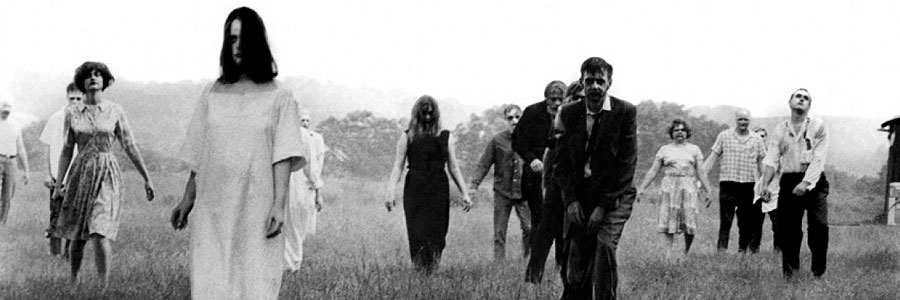
show Night of the Living Dead...
Consumerism: Big Ideas that Changed the World
Please watch the following clips and respond to the videos in your notebook/journal.
Consumerism, the Musical
George Carlin on Consumerism
Consuming Kids
Story of Stuff Documentary
http://storyofstuff.org/
Zombies: for some of you, let's watch and creatively respond to one of the films.
Sorry about the gore.
HOMEWORK: Respond to the film. Write about zombies, use zombies in your poetry, in your haiku, in your stage plays. Use zombies as a jumping off point to comment about mass society as you see it. Consider some of the concepts we have been talking about regarding taboos, society, culture and counter culture.
Subscribe to:
Posts (Atom)
Game Review Article; Ready Player One
Please write a review of the Atari 2600, NES or Sega game you played. Your article should include the following: 1. A researched historic...

-
 Today, please take a look at the following (we'll read this material together because it's so important!) TASK #1 : Journalistic ...
 -
Please complete the following lab tasks today: LAB TASK #1: Choose an app, computer game/program, technology, device, or machine that you...
-
Newspaper journalists usually write a column or are given "inches" to fill for each edition. For an explanation of this, please t...